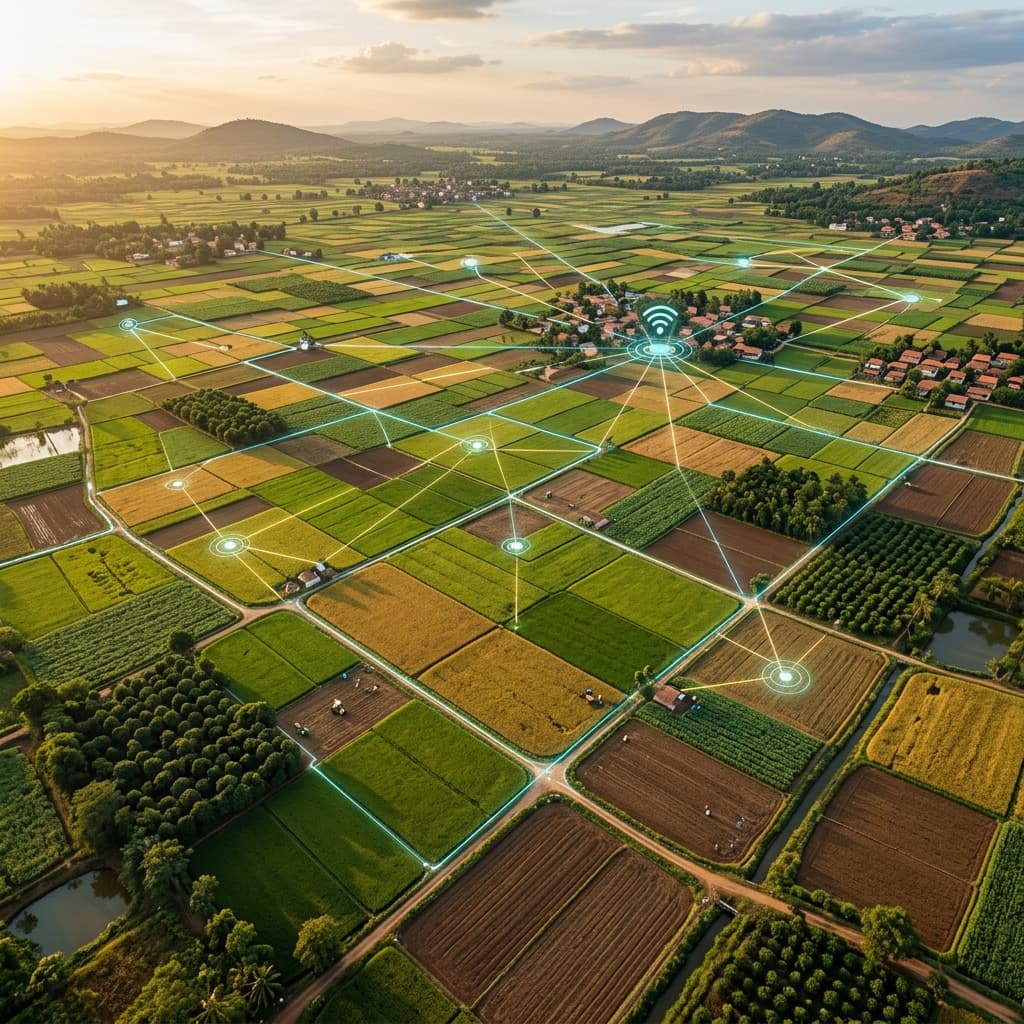
What Is the Cluster-Based Approach in Smart Farming?
The cluster-based model in agriculture involves grouping farmers in a particular village or region into collectives that jointly adopt and manage technological interventions — such as shared weather stations, IoT-based monitoring tools, or precision farming equipment. This collective strategy makes agri-tech adoption more affordable, socially empowering, and scalable for smallholder farmers.
Key Benefits
- Collective adoption builds peer trust and accelerates technology uptake across rural farming communities.
- Shared infrastructure like common weather stations and microclimate sensors reduces per-farmer costs significantly.
- Cluster-level demonstrations act as real-time, trusted endorsements — when one farmer benefits, others follow.
Why Individual Adoption Falls Short in Precision Farming
Most small and marginal farmers in India manage their operations with limited resources. For many, adopting advanced tools such as weather stations, soil health monitoring systems, or agronomic advisory services remains a gradual process, often influenced by immediate priorities and seasonal needs.
More importantly, adoption is heavily influenced by what peers are doing. When farmers see their neighbours using new technologies and benefiting from them, trust in the system grows — making them far more open to trying it themselves. Individual adoption misses this social multiplier effect entirely.
Key Benefits of the Cluster-Based Farming Model
Higher Engagement and Shared Learning
When adoption is done collectively, engagement is naturally higher. Farmers discuss features, share learnings, and support one another in using smart farming tools effectively. This peer-to-peer knowledge exchange is often more impactful than formal training sessions.
Better Monitoring and Progress Evaluation
Cluster-based setups allow for community-level monitoring. This creates opportunities for tracking impact, identifying gaps in usage, and offering timely training or support — making interventions more responsive and effective.
Increased Adoption of Agri-Tech Solutions
Social influence plays a significant role in rural communities. When one farmer in a group benefits from a certain technology, others are more likely to follow. Cluster-level demonstrations serve as real-time, trusted endorsements for smart agriculture devices.
Cost Sharing and Economies of Scale
Pooling resources within a farmer cluster enables more efficient access to advanced technologies. Shared use of tools like weather stations and microclimate sensors ensures benefits are extended across multiple users without compromising effectiveness. This collaborative approach encourages better utilisation of resources and enhances overall impact within the farming community.
Fyllo's Role in Cluster-Based Precision Farming
Fyllo's solutions are designed to work seamlessly within the cluster model, combining shared infrastructure with individual field-level intelligence.
Kairo — Shared Microclimate Intelligence
Fyllo's Kairo devices can be centrally installed to serve entire farming clusters, delivering accurate, real-time advisory on disease and pest prediction and weather forecasts to a group of farmers operating in the same microclimate zone.
Nero Infinity — Personal Field-Level Insights
Individual farmers can complement the shared Kairo setup with affordable Nero Infinity devices, which offer sensor-based irrigation and fertigation insights tailored to their specific field conditions.
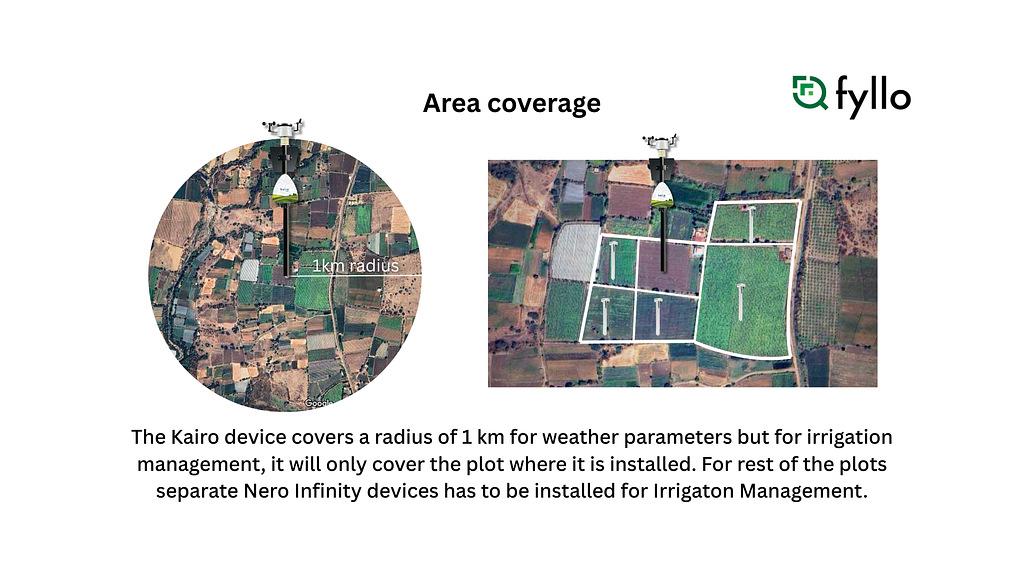
Together, these tools contribute directly to climate-smart agriculture, water-efficient irrigation, and remote farm monitoring — at a fraction of the cost of fully individual deployments.
Looking Ahead: Scaling Through Policy and Partnerships
To make cluster-based technology adoption in agriculture scalable, support from agricultural extension services, NGOs, and agri-tech startups will be crucial.
Organisations like Farmer Producer Organisations (FPOs) and Self-Help Groups (SHGs) can act as effective vehicles to implement and manage cluster-based models, ensuring local ownership, affordability, and sustainability of smart agriculture initiatives across India.
Conclusion
Technology has the power to revolutionise agriculture — but only if it reaches the hands that need it most. A cluster-based approach presents a scalable, inclusive, and sustainable pathway for accelerating technology adoption in rural farming communities.
By building collective strength, we not only reduce costs but also create a robust support system for farmers to embrace the future of agriculture with AI and IoT — together.