What Is Bacterial Blight of Pomegranate?
Bacterial blight (known as telya in Marathi) is the most serious production constraint in pomegranate, caused by the pathogen Xanthomonas axonopodis pv. punicae. It affects all major pomegranate-growing states in India — Maharashtra, Karnataka, Andhra Pradesh, Gujarat, Rajasthan, Assam, and Tamil Nadu — and can cause 60–80% yield losses under favourable environmental conditions.
Key Takeaways
- Bacterial blight thrives at humidity above 60%, temperatures of 25–33°C, and intermittent rainfall above 10 mm — real-time monitoring of these parameters is critical for early intervention.
- IoT-based disease prediction models can forecast blight occurrence days in advance, enabling preventive rather than reactive management.
- Alternating spray combinations of Streptocyclin + Copper Oxychloride and Streptocyclin + Captan at 15-day intervals is the recommended chemical management approach.
Symptoms of Bacterial Blight
The disease produces distinct symptoms across leaves, stems, and fruits.
Leaf Symptoms Small, irregular, prominent water-soaked spots appear initially, later becoming necrotic with a light to dark brown centre surrounded by a water-soaked margin. In advanced stages, individual spots coalesce, giving a blight appearance to the entire leaf.
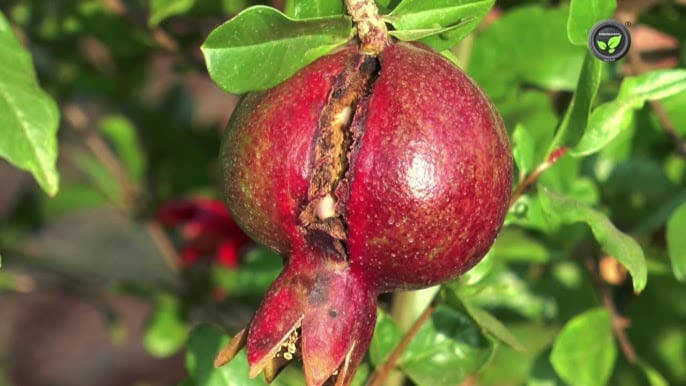
Fruit Symptoms Isolated water-soaked lesions appear first, followed by necrosis with small cracks. This progresses to splitting of the entire fruit, resulting in characteristic 'Y' or 'L' shaped cracking — rendering the fruit unmarketable.
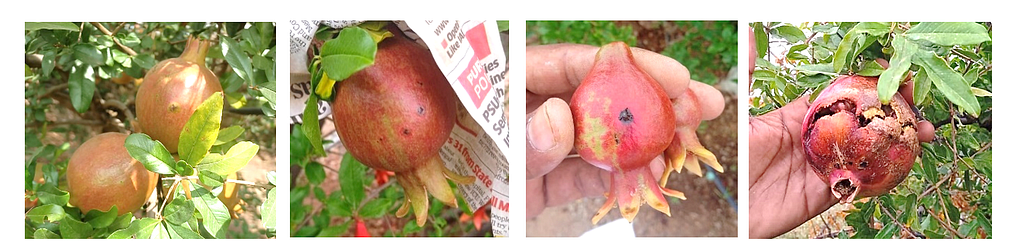
Stem and Twig Symptoms Lesions develop on twigs and shoots, leading to dieback and stunted growth. Infected areas may exude a gummy substance. Dried white encrustation of bacterial ooze is often visible on spots.
Favourable Conditions for Bacterial Blight
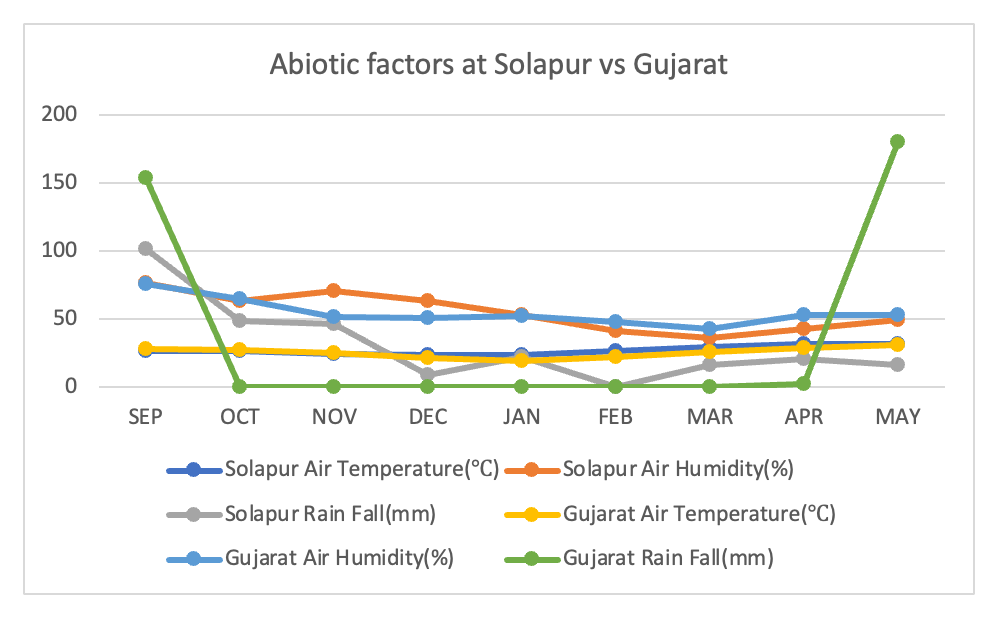
Environmental factors that create favourable conditions for the disease include high humidity (above 60%), temperature between 25–33°C, intermittent rainfall (above 10 mm), and cloudy weather. However, the specific combination of abiotic factors contributing to disease severity varies by location — making farm-level microclimate monitoring essential for accurate prediction.
Case Study: Disease Prediction in Gujarat vs Solapur
Fyllo's disease prediction models were deployed across different geographical locations in India, including Solapur (Maharashtra) and Gujarat. The results revealed significant regional differences in blight risk.
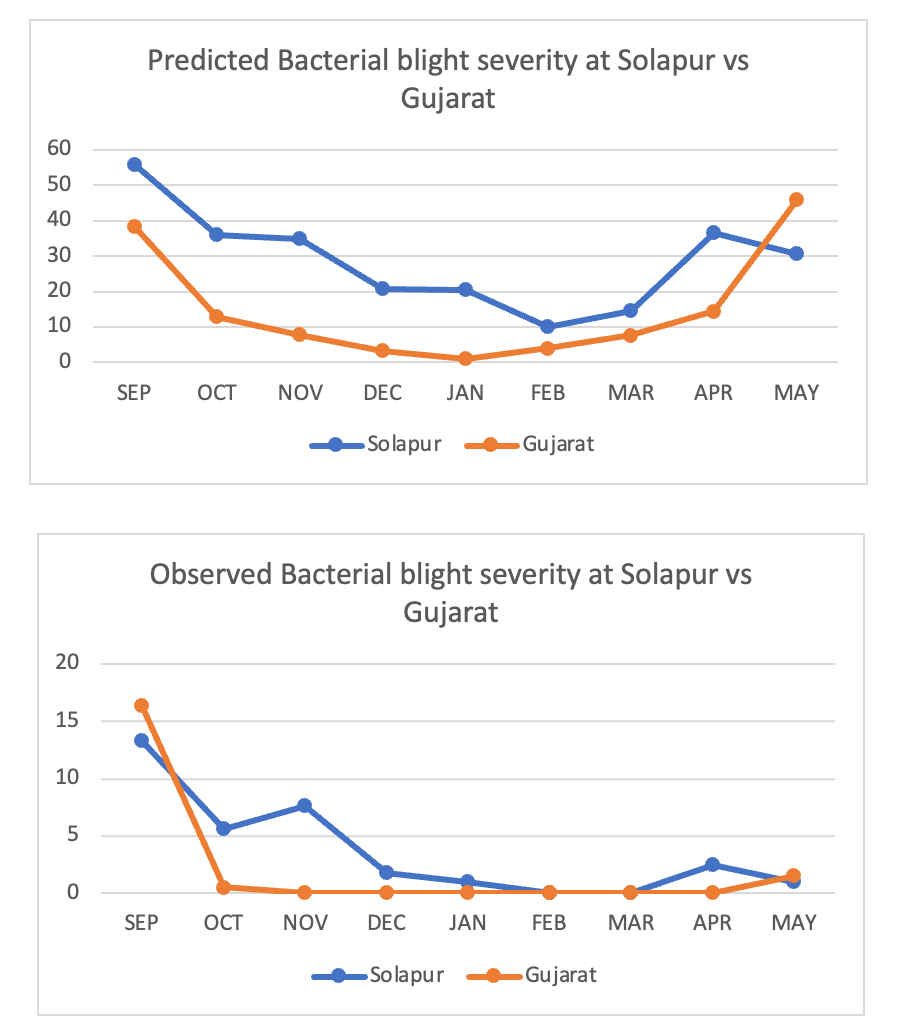
Solapur — Higher Consistent Risk The model showed a high probability of bacterial blight occurrence consistently from September to April. Weather analysis revealed uniform rainfall distribution throughout these months and higher average relative humidity levels — both conducive to sustained pathogen activity.
Gujarat — Sporadic Risk Pattern Gujarat showed lower overall risk with sporadic rainfall patterns, particularly concentrated in September and May. The exception was May, when sudden high rainfall triggered elevated disease probability.
Key Insight Since wind-borne rain splashes are essential for bacterial pathogen spread, rainfall pattern and distribution proved to be the most critical variable in disease occurrence and dissemination. These findings — validated by both predictive models and field observations — highlight why weather-based prediction through IoT is imperative for proactive farm management.
Integrated Disease Management
Controlling bacterial blight is extremely difficult once established in the field, making prevention and early intervention the most effective strategy.
Field Sanitation Remove and burn all affected leaves, stems, and fruits. Maintaining clean field conditions is the single most important cultural practice for managing this disease.
Post-Pruning Treatment Spray 1% Bordeaux mixture immediately after pruning. In severely affected orchards, treat pruning cuts with Bordeaux paste. Apply bleaching powder (20–25 kg/ha) at the base of each plant in the early morning — approximately 100 g per plant.
Spray Schedule During Cropping Season Once new growth starts, alternate between the following spray combinations at 15-day intervals:
- Streptocyclin 0.5 g + Copper Oxychloride 2.5 g/L
- Streptocyclin 0.5 g + Captan 2.5 g/L
- Kasugamycin + Copper Oxychloride 1–1.5 g/L
Do not use a single combination continuously — rotation is essential to prevent resistance buildup.
Hasta Bahar Strategy If disease pressure is high, adopting the Hasta Bahar (winter) cropping season is effective in reducing blight severity, as environmental conditions during this period are less favourable for the pathogen.
How Fyllo Helps Manage Bacterial Blight
Fyllo's Kairo IoT device and AI-powered advisory platform use real-time farm data to forecast disease occurrences in advance. By continuously monitoring microclimate parameters — humidity, temperature, rainfall, and leaf wetness — Fyllo enables farmers to take preventive action before the disease establishes, rather than reacting after symptoms appear.
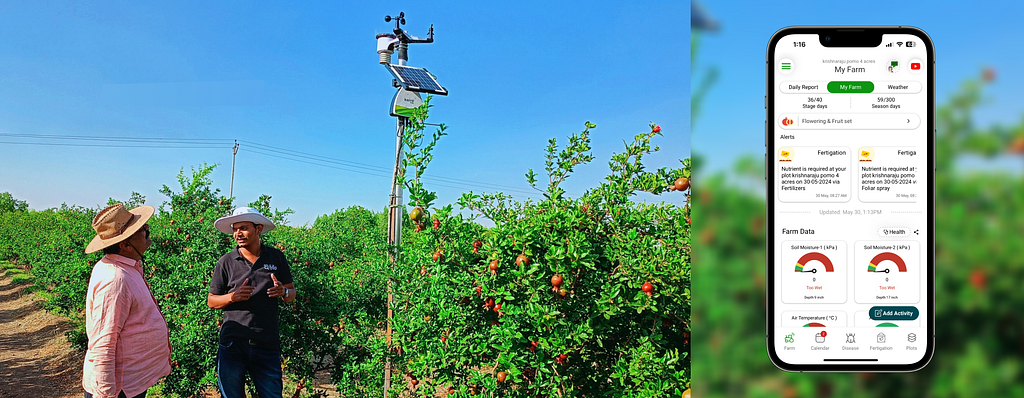
Fyllo's data-driven insights help farmers predict disease and pest occurrence, time their spray applications precisely, and optimise input usage — protecting both crops and margins.