What is Agri-Tech?
Agri-tech, or agricultural technology, is the application of modern technologies — such as IoT sensors, drones, AI-powered advisory platforms, and digital farm management tools — to improve efficiency, productivity, and sustainability in farming. In the Indian context, agri-tech bridges the gap between labour-intensive traditional practices and data-driven, profitable agriculture.
Key Takeaways
- India's $24 billion agri-tech market is only 1.5% tapped — a massive opportunity for farmers and innovators alike.
- Precision agriculture tools like soil sensors and microclimate monitors help farmers cut costs and boost yields with real-time data.
- Agri-tech doesn't replace the farmer — it empowers them to make smarter, faster, and more profitable decisions.
Why Agri-Tech Matters for India
India's agriculture supports 58% of the population but contributes only 18% to GDP. This makes the sector labour-intensive but not income-rich. Outdated practices, high risks, and inefficient supply chains lead to low returns for millions of farmers.
This is where agri-tech in India becomes critical. From increasing farm productivity to making farming more data-driven and sustainable, technology in agriculture can bridge this massive gap.
India ranks 8th in global agricultural exports with a 2.33% share (Press Bureau of India). Yet, according to Ernst & Young, only 1.5% of India's $24 billion agri-tech market potential is currently tapped. This stark contrast reveals the urgent need to scale agri-tech adoption and transform Indian agriculture.
The Scope of Agri-Tech in Modern Farming
Agri-tech encompasses a wide range of innovations that make modern farming in India more profitable and resilient:
- Precision farming using sensors and IoT devices for real-time data collection
- Smart irrigation systems that reduce water waste
- Drones and satellite imaging for crop monitoring
- Digital platforms for farm management and crop advisory
- Supply chain tech to reduce post-harvest losses
- Market linkage platforms that ensure better income for farmers
- Agri-fintech solutions for credit and insurance
How Fyllo Is Driving Precision Agriculture
At Fyllo, we work closely with Indian farmers to implement precision agriculture through intelligent agri-tech tools:
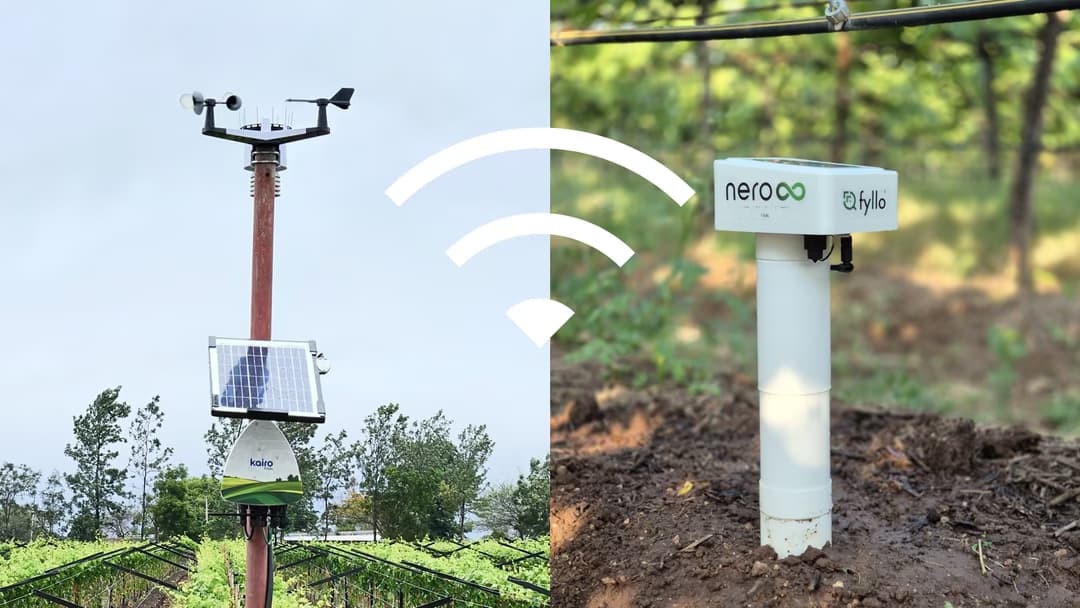
Nero — Soil-Embedded IoT Sensor Monitors soil moisture and temperature in real time, helping farmers decide the optimal time to irrigate and avoid over- or under-watering.
Kairo — Microclimate Monitoring Device Tracks hyperlocal crop conditions including humidity, temperature, and leaf wetness — supporting climate-smart farming decisions at the plot level.
AI-Powered Advisory Platform An integrated app that alerts farmers to stress, pest, or disease threats early — saving time, crops, and costs. By combining sensor data, weather forecasts, and crop science, Fyllo empowers farmers to make accurate decisions in real time.
Case Study: Spreading Agri-Tech Awareness in Karnataka
In 2024, Fyllo participated in a grassroots agricultural technology exhibition in Karnataka to raise awareness about smart farming tools. Live demos of Nero, Kairo, and the AI platform engaged over 1,200 farmers.
This wasn't just a tech showcase — it was a conversation between traditional agriculture and modern innovation. Hundreds of farmers signed up for pilot programs, and Fyllo was honoured with the "Best Innovative Stall" award.
The goal was simple: build trust by showing that technology doesn't replace the farmer — it empowers them.
The Road Ahead: Agri-Tech Adoption Is No Longer Optional
The need for digital transformation in agriculture is urgent. With erratic weather, market pressures, and rising costs, agri-tech adoption in India is no longer optional — it's essential.
At Fyllo, we're committed to building not just tools, but trust. We're helping farmers see that technology for agriculture is not a distant dream — it's a practical reality that can be used today. By combining smart farming technologies with personalized farmer outreach, we're turning potential into progress.
Because for Indian farming, the future isn't tomorrow. It's already here.